Reverse Engineering (AutoCAD): Diesel Motor Internal System Sub-Assembly
Scroll ↓
Please click the image to open FULL DRAWING
-
August 2025
-
Liasing with client, draftsman, production manager
-
Design for manufacturing and as per client requirements. Must fit existing diesel motor.
-
Reverse engineered design (dimensions, tolerances, and material identification)
AutoCAD model & drawings
-
BDGT Precision Engineering
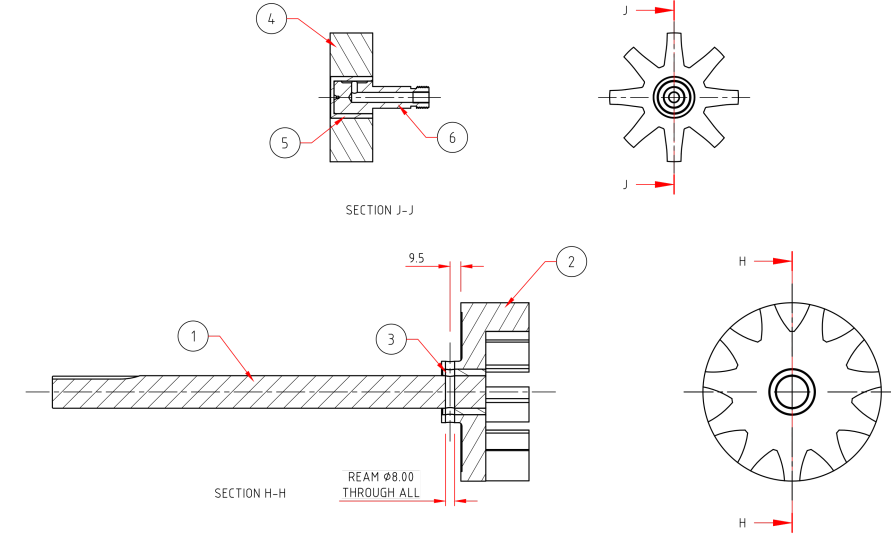
Our client had a key diesel pump breakdown, requiring a quick turn around on the refurbishment of internal componentry. After assessing their condition, we determined the gears could be refurbished, but the shafts required re-fabrication. However, there were no drawings or manuals to reference given the age of the pump, so the sub-assembly had to be reverse-engineered.
Objective
Reverse engineer and refurbish/fabricate parts for precise fitment within the diesel pump, ensuring the driving and driven gears mesh correctly.
Design principles
While dimensions can be estimated from the worn and broken parts, tolerances must be carefully considered to minimise wear and maintain each part’s function. Material is simultaneously evaluated with any necessary heat treatment required to improve physical properties. Then, the fabrication process was assessed by the BDGT team to maximise the componentries’ lifespan and prevent faults in the future.
Production process
With the design approved by the customer, final drawings were extracted. Starting at the driving end of the pump (Item 1 - Assembly),
The driving shaft was manufactured with a precision-ground bar to reduce machining time and cost
The driving gear was hollowed out with a -0, +0.015 tolerance to allow an on-size bush with a -0.01, +0 tolerance to be press fit
The bush was given a lead for alignment when press fitting, and a lead on the ID to guide the shaft and prevent galling
The driving gear required less work as a polish of the ID after removing the old bush was sufficient to house the new bush
Given this gear rotates on the driven shaft, the new bush was made out of bronze and toleranced to allow for crush when shrink-fitted
The shafts were manufactured to complement these tolerances and made using 4140, due to its high strength-to-toughness ratio
Once the parts were fabricated and fitted, a hole was reamed through the driving gear and shaft to install an extraction dowel, ensuring they rotate as a single unit, preventing axial movement. This design also allows for easy shaft replacement in the future.